
In addition, standard costing can be a valuable tool for companies that are trying to improve their production processes. By comparing actual costs to standard costs, companies can identify areas where they need to make changes to reduce costs and optimize the workflow. Businesses can also use standard costing to set target costs for new products or services. Finally, standard costing can help companies evaluate the performance of their employees and suppliers. We use variance analysis to compare the standard costs of a product or service to the actual expenses incurred. This comparison aims to identify variances that management needs to address.
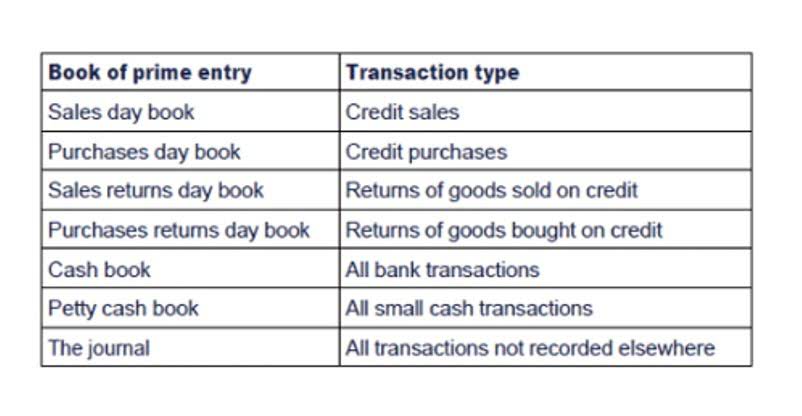
Classification and Codifications of Accounts:
- Say a winery establishes standard costs for labor where each case of wine should require 0.5 hours of direct labor at a standard rate of $20 per hour.
- Direct material and direct labor are considered variable manufacturing costs, since the total amount for these costs changes based on production.
- In order to calculate the direct materials usage (or quantity) variance, we start with the number of acceptable units of products that have been manufactured—also known as the good output.
- Expected sales capacity should be considered for fixing volume of production.
- Losses, both normal and abnormal, in each process should be gone into for a considerable period of time.
Labor costs include wages paid to employees directly involved in production. The standard cost for labor is calculated based on the time required to produce a product and the wage rate. At its core, standard costing creates a financial “blueprint”; a benchmark against which actual performance can be measured.
Labor Variance

Actual variable manufacturing costs incurred were $181,500 over https://www.bookstime.com/ the budgeted or standard amount. While both methods use planned rates somewhere, standard costing applies this approach across the board. Normal costing makes much more sense when your material and labor costs swing but your manufacturing overhead stays relatively steady month to month. If you have a system that tracks costs automatically, however, the accuracy of normal costing always beats out standard costing. Start by identifying all the materials required to produce your product or deliver your service, like the cleaning supplies used to turn over a hotel room. Next, use historical data, supplier quotes, or industry standards to estimate the cost of each material.
Pros and cons of standard cost accounting
This attainable standards represent an optimal achievable standard and take into account predictable or expected wastage unlike ideal standards. However, the standard does not make any provisions for avoidable interruptions as these can be easily avoided by using improving the efficiency of the processes. This promotes a sense of accountability within the management and the employees of a business. Since attainable standards are developed with realistic goals, these can have a positive impact on the motivation of employees. The difference between the standard (expected) volume of production and the actual volume of production, gives rise to Bookkeeping for Startups the standard cost volume variance. Khaleel industries operating in the business of manufacturing steel pipes are worried about its rising cost and want to make a budget starting this year.
Standard Costing for Control
Please do not copy, reproduce, modify, distribute or disburse without express consent from Sage.These articles and related content is provided as a general guidance for informational purposes only. Accordingly, Sage does not provide advice per the information included. These articles and related content is not a substitute for the guidance of a lawyer (and standard costing especially for questions related to GDPR), tax, or compliance professional. When in doubt, please consult your lawyer tax, or compliance professional for counsel. Sage makes no representations or warranties of any kind, express or implied, about the completeness or accuracy of this article and related content.
What Are Standard Costs? They’re Estimates
Baker Tilly US, LLP and Moss Adams LLP are licensed CPA firms that provide assurance services to their clients. Baker Tilly Advisory Group, LP and its subsidiary entities provide tax and consulting services to their clients and are not licensed CPA firms. ISO certification services offered through Moss Adams Certifications LLC.


Implementing standard costing can vary based on industry, company size, and specific requirements. Despite its advantages, businesses can face several challenges when implementing standard costing. To better understand how standard costing fits into your overall financial strategy, let’s take a moment to compare it with a budget.
- A portion of these fixed manufacturing overhead costs must be allocated to each apron produced.
- Managers can use the standard cost formula to make projections about supplies expense or to evaluate the actual amount spent on supplies.
- The next step is the classification of accounts of expenses, revenue, or assets under suitable headings and codes e.g., Direct Material OA to OA5.
- Budgets are projections for the future and therefore they are of great use to the effective functioning of the standard costing system.
- This does not mean the actual costs will never be used, typically a company’s accountant will periodically update the variances as that information becomes available.
Build a cost accounting model that works for your business
For example, the direct labor necessary to produce a wood desk might include the wages paid to the assembly line workers. Indirect labor is labor used in the production process that is not easily and economically traced to a particular product. Examples of indirect labor include wages paid to the production supervisor or quality control team.
